
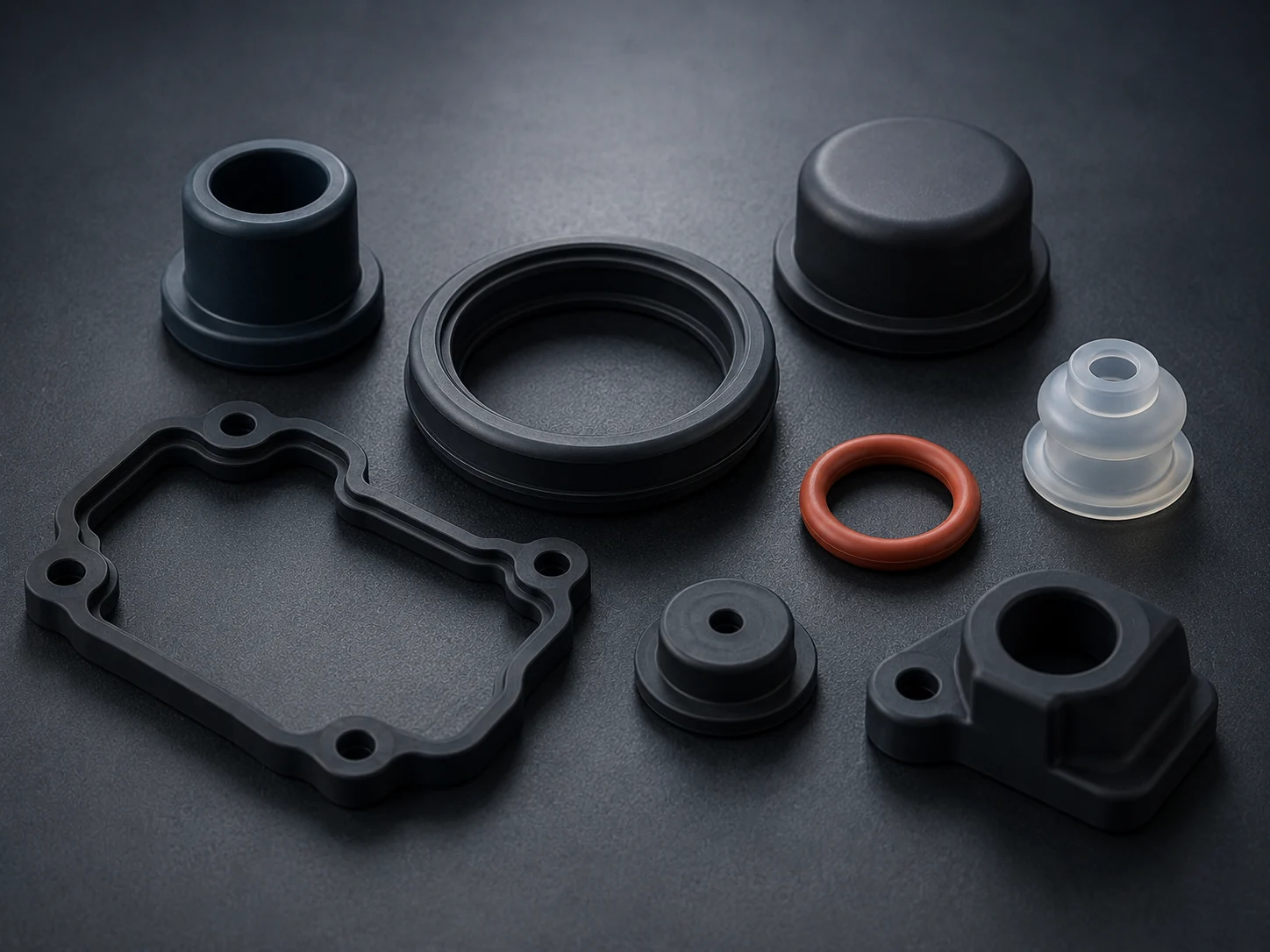
DISCRETE MOULDED COMPONENTS
HTV Silicone Compression Moulding
17 Compression Moulding PressesReview HTV Silicone Compression Moulding for discrete moulded silicone components.
Representative outputs
SILCAP operates two in-house HTV silicone manufacturing routes: Compression Moulding for discrete moulded parts, and Silicone Extrusion for continuous profiles, sections, strips, cords and tubing. Compare the two routes below, or send a drawing or sample and we will review the appropriate route for your requirement.
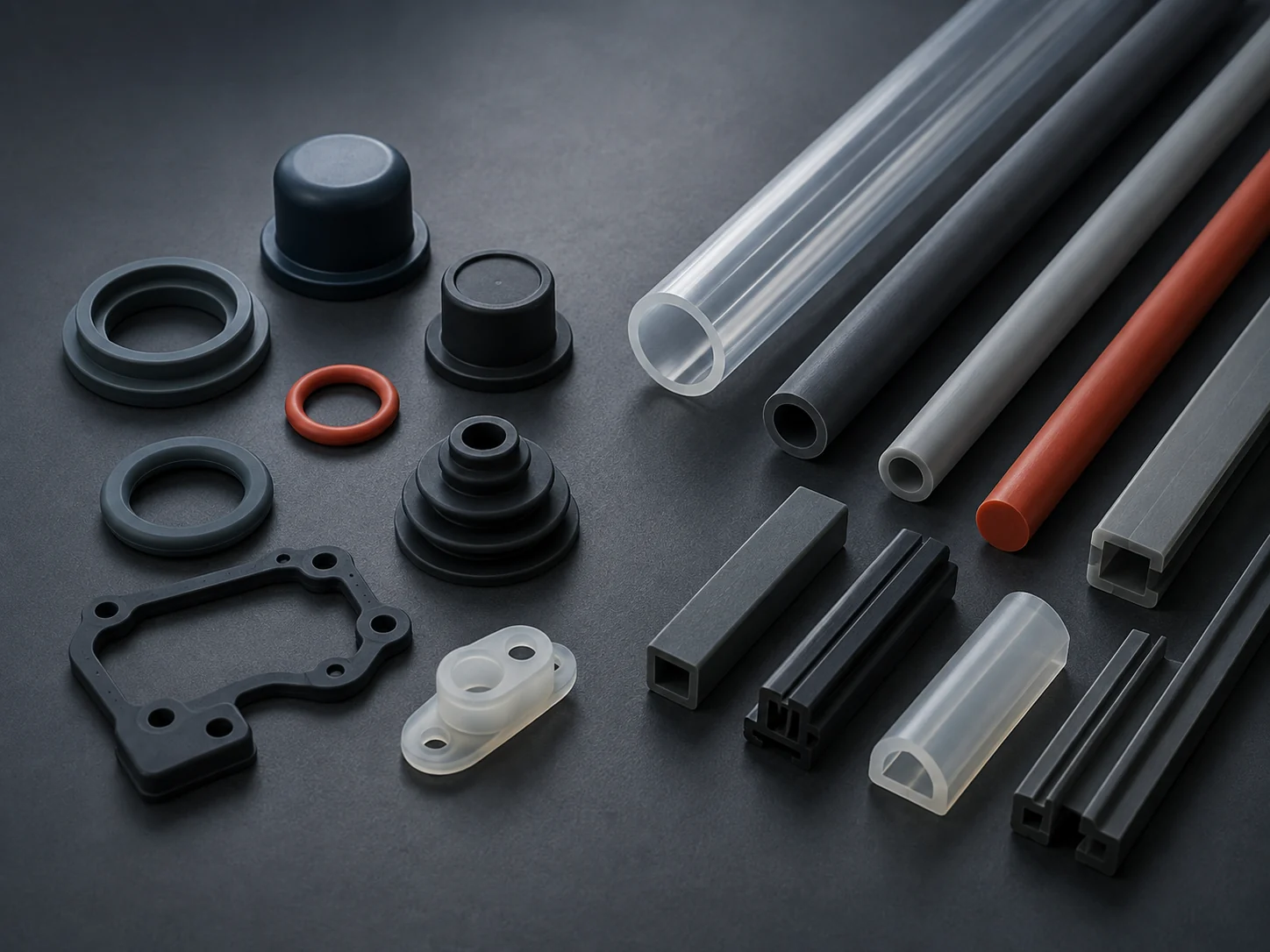
Review the two pathways below to understand whether your requirement involves a discrete moulded silicone component or a continuous silicone profile.
Review HTV Silicone Compression Moulding for discrete moulded silicone components.
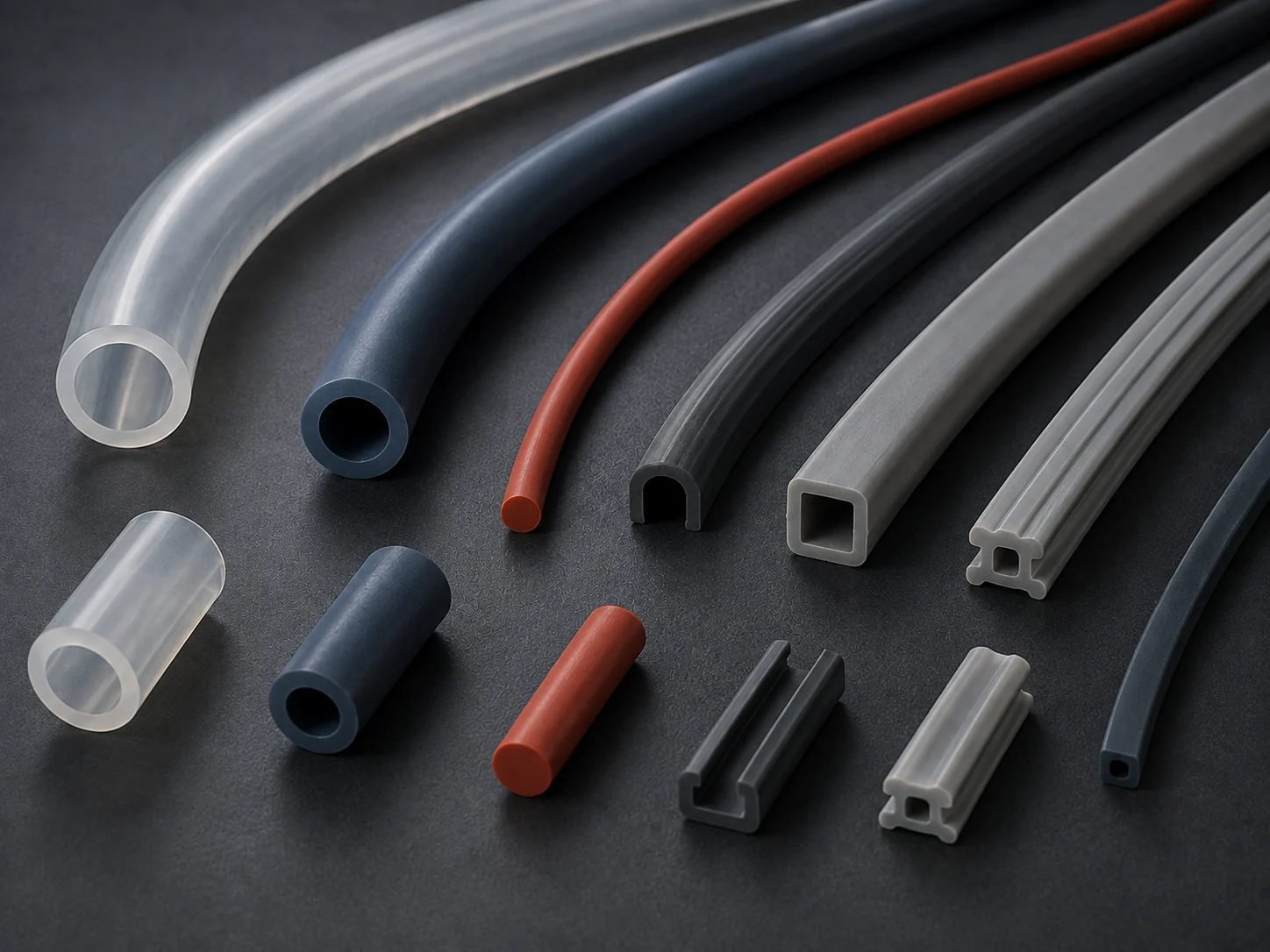
Review HTV Silicone Extrusion for continuous silicone profiles.
Consider these key project factors when reviewing HTV Silicone Compression Moulding and HTV Silicone Extrusion for your requirement during initial project review.
| Project Factor | HTV Silicone Compression Moulding | HTV Silicone Extrusion |
|---|---|---|
| Component Form | Discrete moulded component | Continuous silicone profile |
| Geometry | Overall part geometry | Continuous cross-section |
| Available Project Information | Drawing, dimensional information or physical sample | Cross-section information, dimensions or physical sample |
| Application and Demand Context | Sealing or assembly role and estimated demand | Sealing or assembly role and estimated demand |
Compression moulding is the pathway to review for a discrete moulded silicone component. Extrusion is the pathway to review for a continuous silicone profile. SILCAP reviews the submitted project information before identifying the appropriate next step.
A project may include both moulded components and extruded profiles. Each requirement is reviewed according to the available drawings, dimensions, samples and application context.
Tooling or die requirements may be coordinated through qualified external partners after technical review.
No single tolerance can be guaranteed for every silicone product. Dimensional requirements are reviewed according to the submitted geometry, material expectations, manufacturing pathway and project scope.
Submit an available drawing, dimensional information, cross-section information, or a physical sample together with application context and estimated quantity.
Submit a drawing, dimensional information, cross-section information, or a physical sample together with application context and estimated quantity. SILCAP will review the submitted information and assess which manufacturing pathway should be considered next.