SILCAP Logo
Home / Applications
APPLICATION AREAS

Industries & Application Areas

Start with the application context. SILCAP reviews the product or component, technical duty, project requirements and manufacturing fit, then routes the project to the most relevant product or capability review.

TECHNICAL COMPONENTSRoute by geometry, duty and operating context
PRODUCT PROGRAMMESRoute by function, form and commercial scope
PROJECT-SPECIFIC REVIEWQualify material, evidence and target-market needs
SILCAP APPLICATION ROUTING MAP

Use the Application Context to Find the Right SILCAP Review Route

Applications are not treated as one broad catalogue. The first decision is whether the project is primarily a technical component, a consumer product programme, or a project requiring application-specific qualification.

01
TECHNICAL / INDUSTRIAL

Components Defined by Geometry, Duty and Operating Conditions

Profiles, gaskets, sealing components, moulded technical parts and related projects where interface, dimensions, material and operating exposure drive the review.

02
CONSUMER / PRODUCT PROGRAMMES

Products Defined by Function, Form and Programme Requirements

Kitchenware, babycare-oriented and private-label product projects where product function, form, material, colour, packaging and programme scope shape the review.

03
APPLICATION-SPECIFIC QUALIFICATION

Projects Where Material, Evidence or Target-Market Scope Needs Clarification

Food-contact, selected personal-care and other customer-specific projects can be reviewed case by case according to product design, material, manufacturing scope and agreed documentation requirements.

Application labels are routing cues, not blanket confirmation of material suitability, certification or final manufacturing route.

APPLICATION LANDSCAPE

Start With the Product or Operating Context

Representative application areas help identify the next review route. Final suitability remains dependent on the actual drawing, sample or product concept and the project requirements.

01
TECHNICAL

Industrial & Technical Components

Profiles, gaskets, sealing components and moulded technical parts reviewed around geometry, function, material and operating requirements.

Industrial Route
02
TECHNICAL

Home Appliances & HVAC

Appliance and HVAC sealing projects reviewed according to component geometry, temperature exposure, flexibility, sealing function and assembly conditions.

Industrial Route
03
TECHNICAL

Construction & Building

Glazing, weather-sealing and construction-related silicone component projects reviewed around profile or part geometry and environmental requirements.

Industrial Route
04
TECHNICAL

Automotive & Mobility

Sealing profiles, gaskets, protective components and custom moulded parts reviewed around geometry, material, operating exposure and assembly requirements.

Industrial Route
05
PRODUCT PROGRAMMES

Kitchenware & Consumer Goods

Kitchenware, bakeware, household and private-label product programmes reviewed around function, form, material, colour, quantity and delivery scope.

06
PROJECT-SPECIFIC

Food-Contact Projects

Product type is reviewed first; material documentation and any required product-specific testing are then qualified within the agreed project scope.

Project Review
07
PROJECT-SPECIFIC

Personal Care & Custom Projects

Selected customer-specific projects can be reviewed case by case according to product design, material, manufacturing fit and documentation requirements.

Project Review
APPLICATION COVERAGE

Application Areas

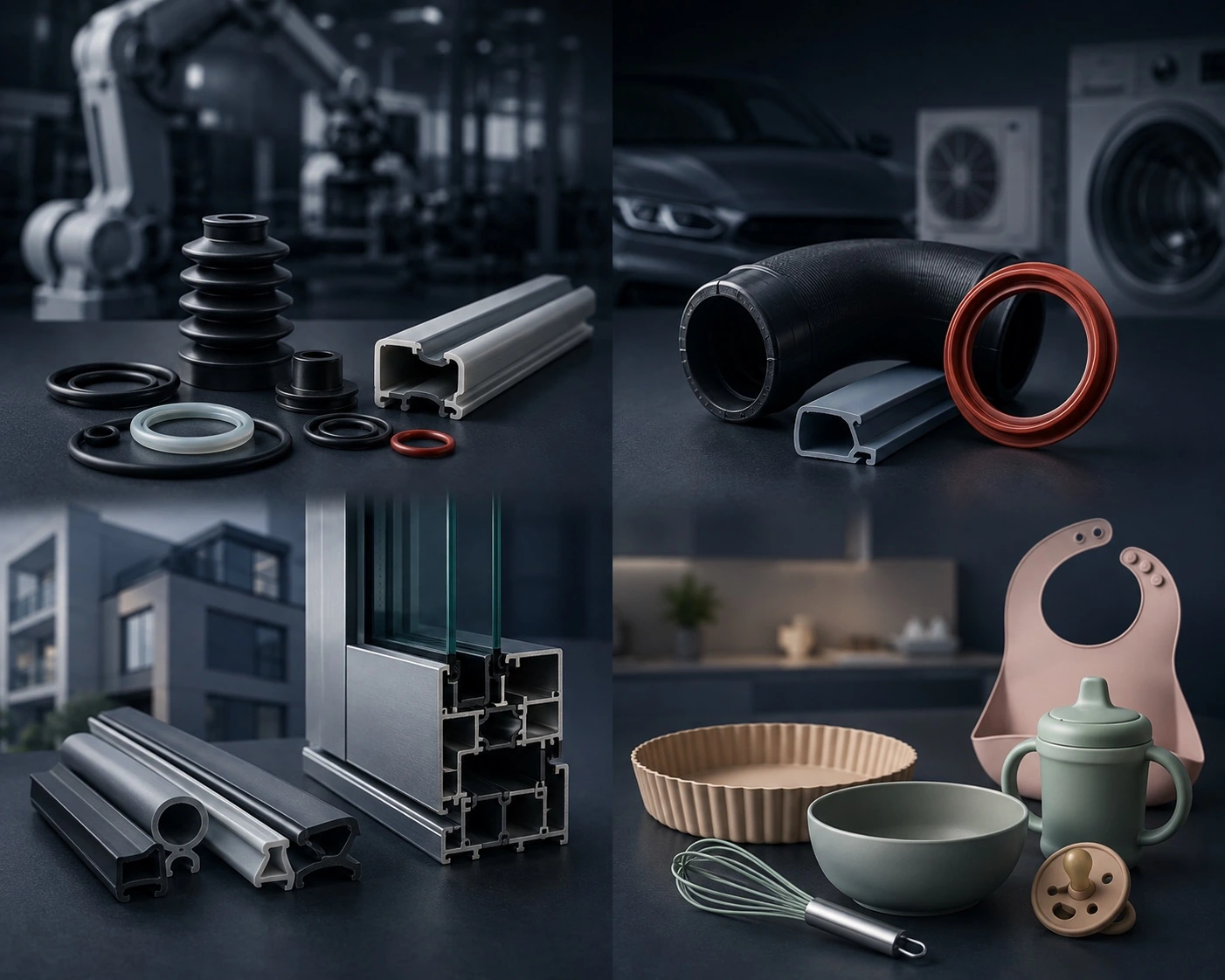
Visuals represent product or application families. Final project suitability is reviewed against drawings, samples, material requirements, operating conditions and documentation needs.

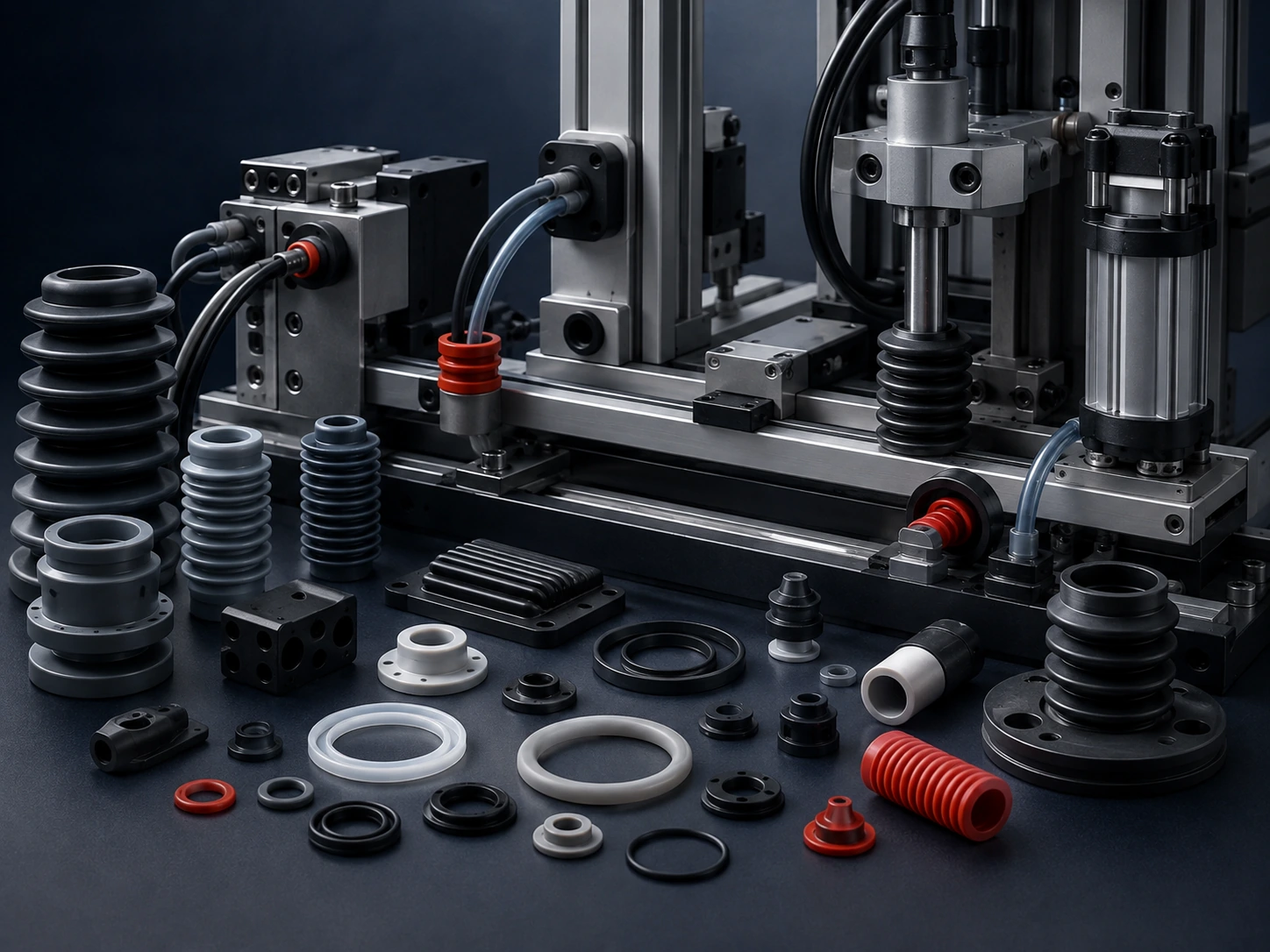
Industrial Equipment & Automation
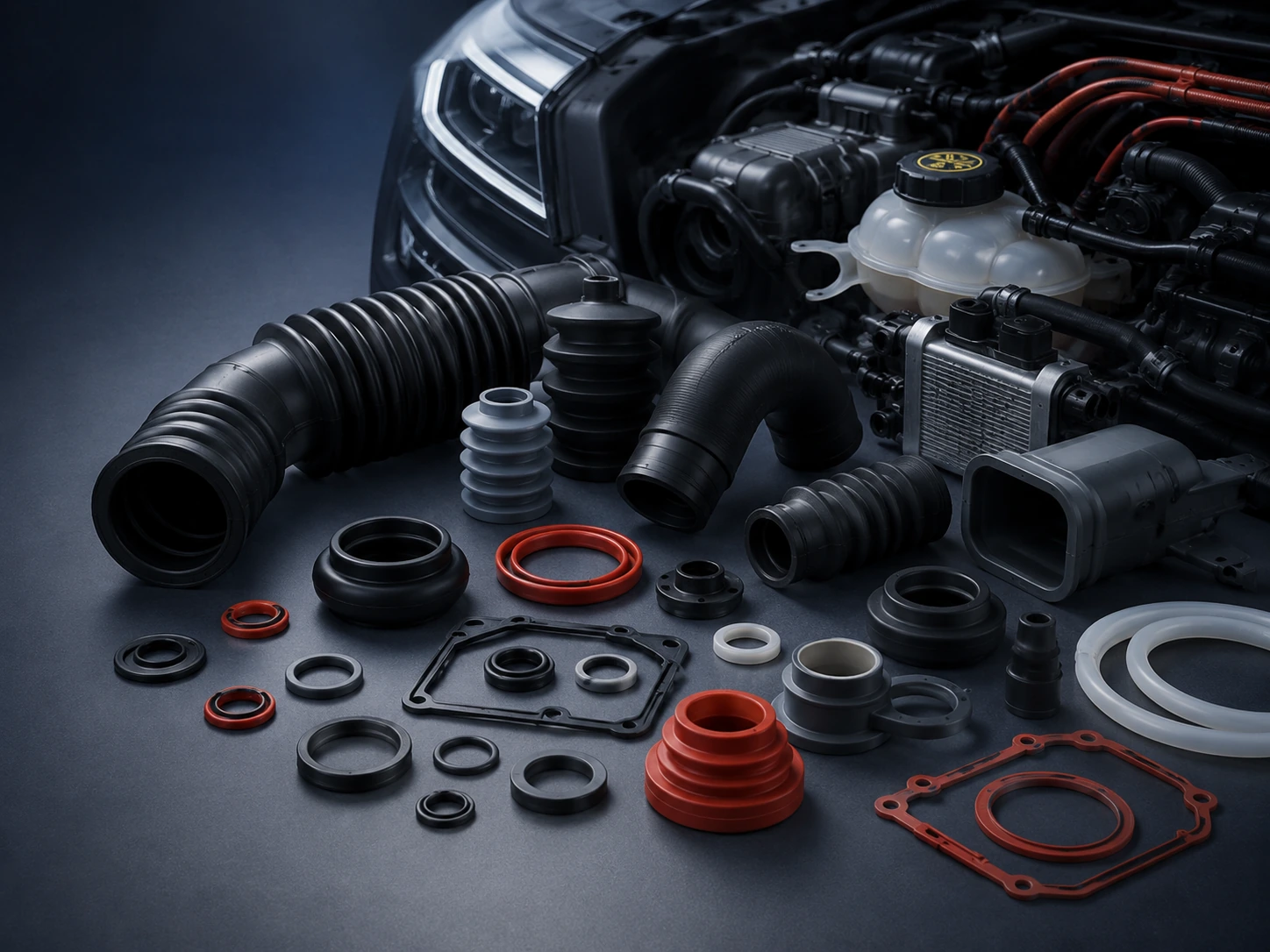
Automotive & Mobility
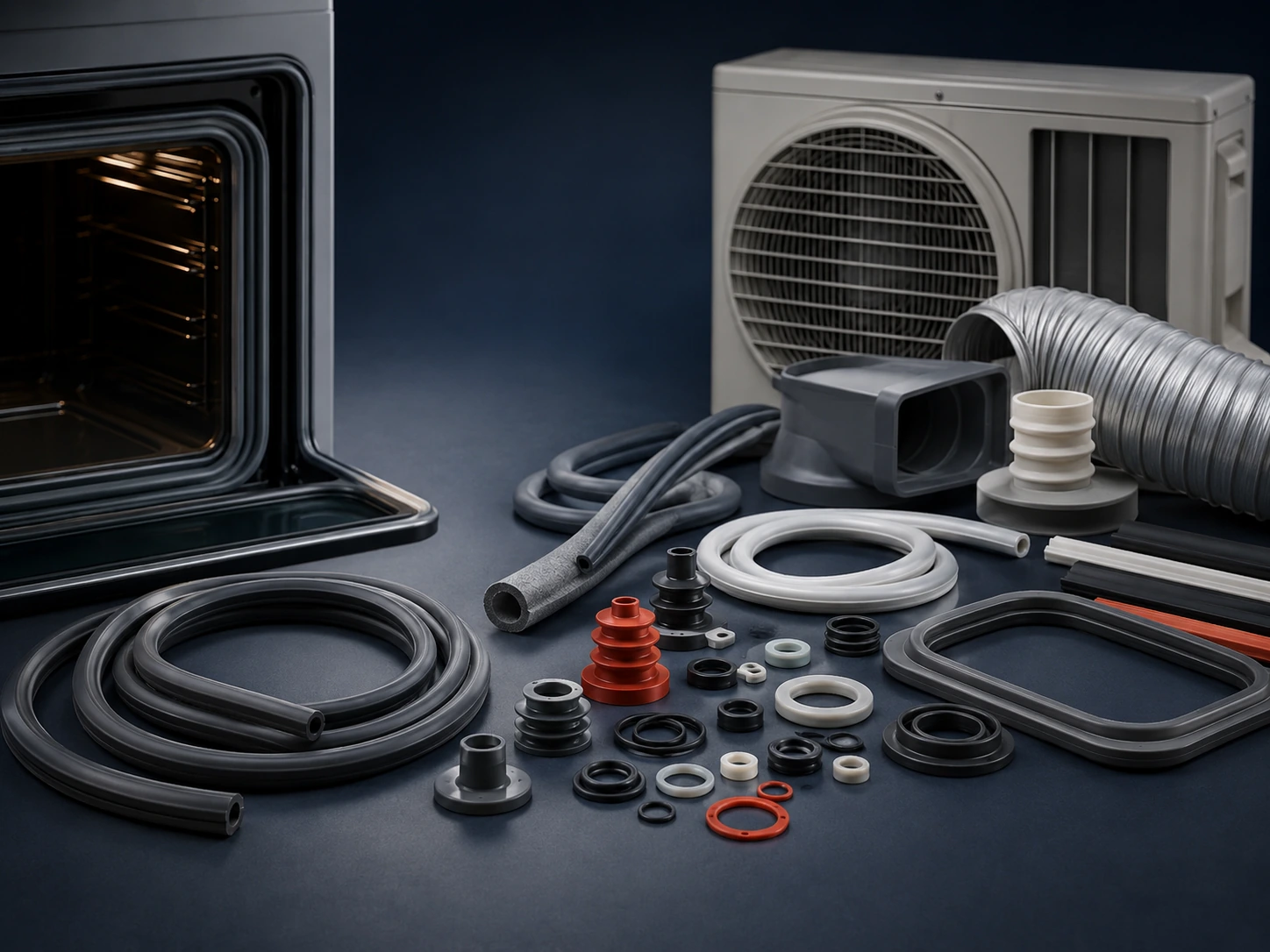
Home Appliances & HVAC
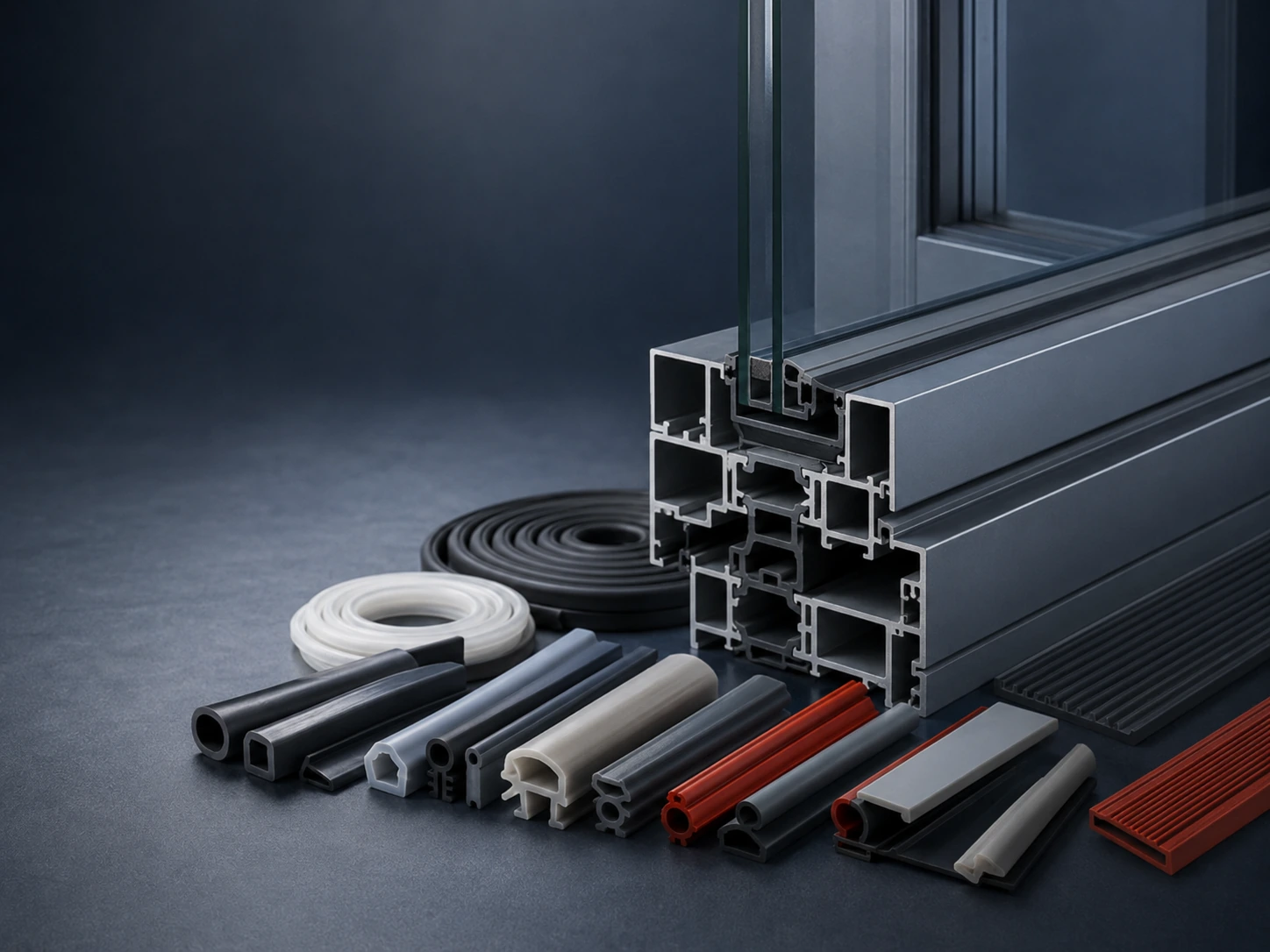
Construction & Building
Food Preparation & Baking
Babycare & Feeding
Babycare & Feeding
Household & Everyday Use
OEM & Private Label
OEM & Private Label
PROJECT PATHS

Technical Components and Consumer Products Start From Different Questions

Applications acts as the routing layer. Detailed engineering, product-development and commercial decisions continue in the route that matches the project context.

TECHNICAL / INDUSTRIAL PATH

Start With Geometry and Operating Duty

  1. 01
    Geometry & Interface

    Part or cross-section, dimensions and assembly or sealing interface.

  2. 02
    Functional Duty

    Sealing, movement, protection, flexibility or another defined technical function.

  3. 03
    Material & Conditions

    Hardness, temperature, exposure and other project-specific operating requirements.

  4. 04
    Industrial Review

    Confirm manufacturing route, tooling/sample needs and evidence scope.

Continue to Industrial Components
CONSUMER / PRODUCT PROGRAMME PATH

Start With Function, Form and Programme Scope

  1. 01
    Product Function

    What the product is intended to do and how it will be used.

  2. 02
    Form & Material

    Product geometry, Shore A, colour and relevant handling requirements.

  3. 03
    Programme Scope

    Quantity, assortment, branding, packaging and repeat-demand expectations.

  4. 04
    Product Route

    Continue through Kitchenware, Babycare or Consumer Private Label as appropriate.

PROJECT QUALIFICATION INPUTS

What SILCAP Needs to Route the Project Correctly

The same basic inputs help determine which product route, manufacturing process and documentation scope should be reviewed next.

01Drawing, Sample or Product Concept

Geometry, dimensions, product form and known interfaces.

02Intended Function or Operating Context

Use, sealing duty, movement, handling, assembly or relevant exposure.

03Material, Shore A & Colour

Known material basis, hardness and colour requirements where defined.

04Quantity & Demand Profile

Initial quantity, expected repeat demand and programme timing.

05Tooling & Sampling Status

Existing tooling/sample status or new tooling requirements coordinated through approved external tooling partners.

06Documentation & Delivery Scope

Target-market requirements, packaging, labelling and any project-specific testing needs.

IN-HOUSE HTV SILICONE MANUFACTURING SCOPE

Two Manufacturing Processes Support the Application Review

SILCAP performs HTV silicone compression moulding and HTV silicone extrusion in-house. The suitable route is confirmed only after the actual geometry, function and project requirements are reviewed.

01
DISCRETE MOULDED GEOMETRY

HTV Silicone Compression Moulding

Reviewed where the project requires an individual moulded silicone part and the geometry, mould structure, material and dimensional requirements are evaluated together.

View Compression Moulding
02
CONTINUOUS CROSS-SECTION

HTV Silicone Extrusion

Reviewed where the project requires a continuous profile, section, strip, cord, tube or other technically relevant continuous silicone geometry.

View Silicone Extrusion
DOCUMENTATION & TESTING

Evidence Scope Follows the Actual Product and Application

Available raw-material reports and project-specific documentation are reviewed against the defined product, material, application and agreed target-market requirements. Where product-specific testing is required, SILCAP can coordinate testing through an external laboratory within the agreed project scope.

01Material Evidence

Review available material reports and declarations against the specific project.

02Project-Specific Testing

Define any required final-product or substance-specific tests within the agreed scope.

03Target-Market Requirements

Confirm documentation needs according to the intended product and agreed market scope.

APPLICATION ROUTING

Not Sure Which SILCAP Route Fits Your Project?

Share the drawing, sample or product concept together with intended use, quantity, material and documentation requirements. SILCAP can review the project and route it to the appropriate product or manufacturing path.